HomeServicesConcrete Work

Concrete Sidewalks and Flatwork in Covington, GA

Cracked concrete, heaving sidewalks, or a new property with no walkways at all. These problems get worse every year they go unaddressed. Liba sets the forms to grade, places rebar for structural integrity, pours the right mix, and finishes it clean. The result is concrete that holds up through Georgia clay and freeze-thaw cycles for decades, not a few years.

Call (470) 226-7215
GDOT Certified Minority-Owned Woman-Owned Licensed & Insured Family-Owned Since 2013
Done Right the First Time

Why Cheap Concrete Fails in Three Years

A cracked or heaving sidewalk is not just an eyesore. It is a trip hazard, a liability, and a sign that the pour underneath was done without proper prep. Georgia clay soil shifts with moisture. Without adequate base excavation, well-compacted fill, and rebar running through the slab, the concrete has nothing to hold it in place when the ground moves.

Most low-bid concrete pours skip the rebar and rush the cure. They look fine on day one. By year three, you have a network of cracks radiating from every weak point in the slab. The freeze-thaw cycles that Georgia gets in winter accelerate this: water enters the cracks, expands when temperatures drop overnight, and splits the concrete further. You end up paying for demo and a full repour instead of just the original job done correctly.

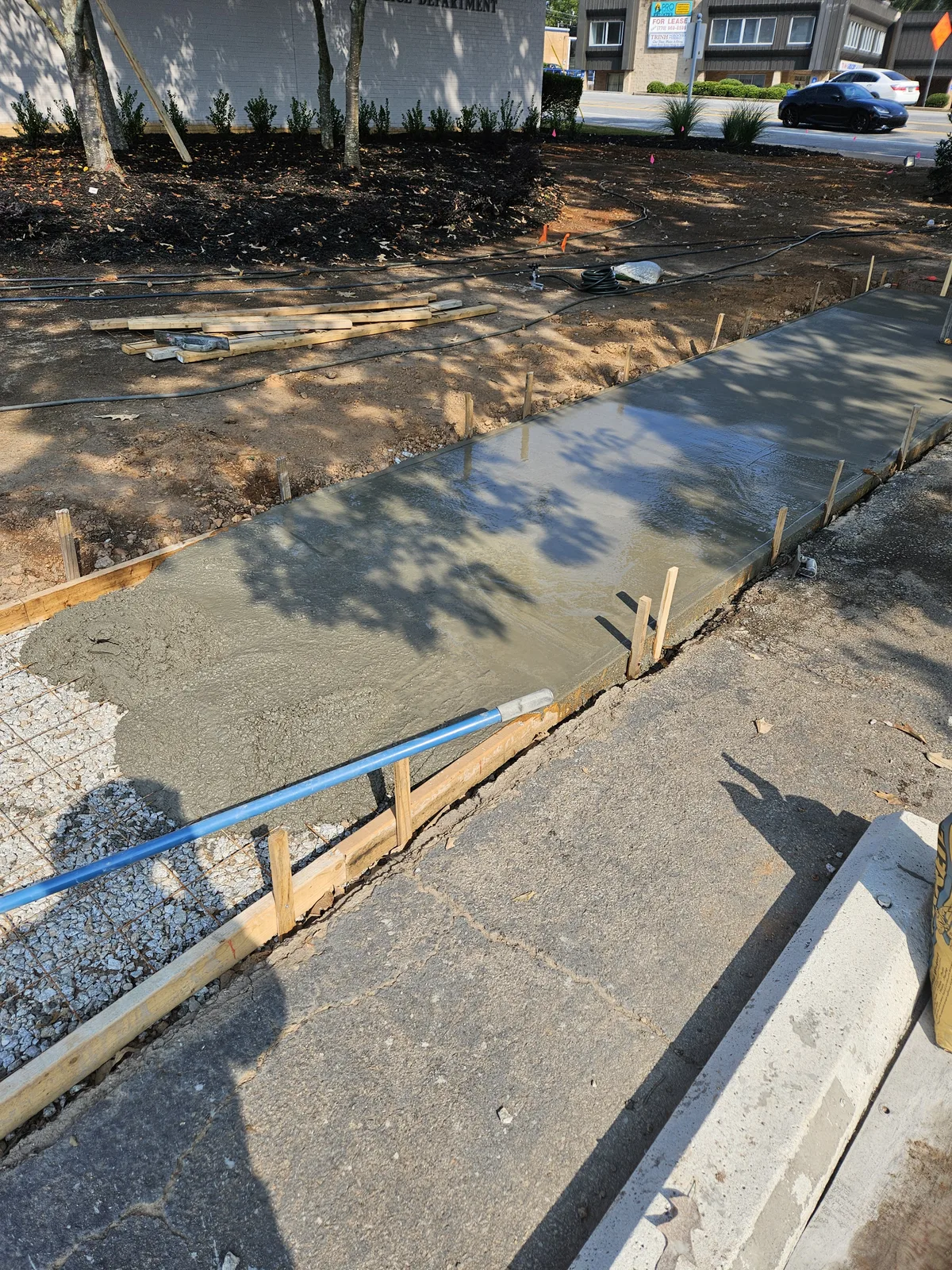
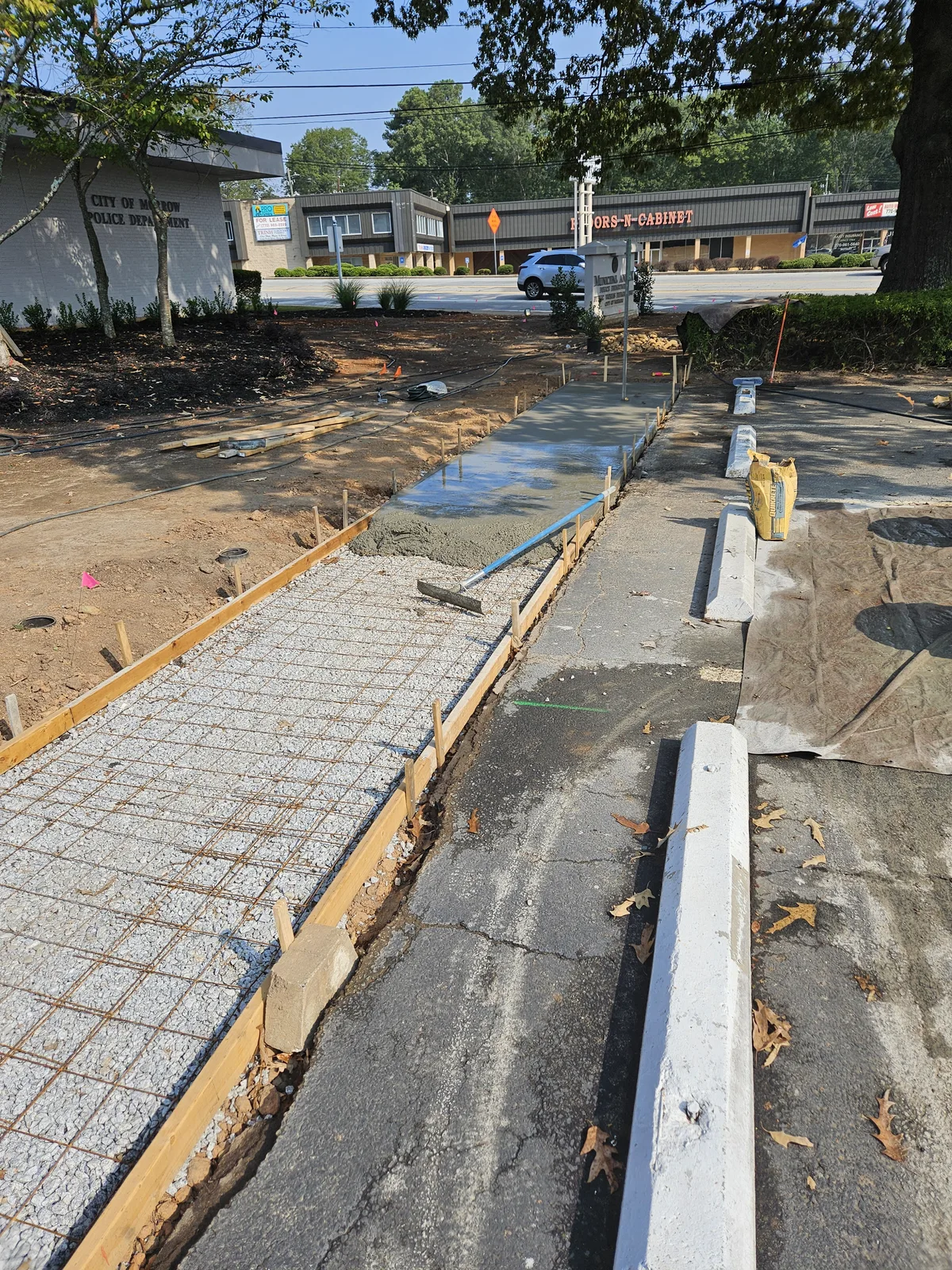
At Liba, the process starts with proper excavation to the right depth for the application, whether that is a residential sidewalk, a commercial parking apron, or a patio. We set forms to grade so the finished surface drains correctly and does not trap water against a building or along a low edge. Rebar goes in before every pour. Control joints are cut at the right spacing to direct any shrinkage cracking to predetermined lines where it will not be visible or structural.

We work with both residential and commercial clients across Covington, Conyers, McDonough, Monroe, and the surrounding Newton County area. Scope ranges from a short front walkway to full commercial parking areas and government-contracted flatwork. Our GDOT certification covers the latter. Every job, regardless of size, gets the same formwork and rebar process.

After the pour we control the cure. In Georgia summers, concrete that dries too fast on the surface develops surface cracks before the interior has gained strength. We keep new pours covered and misted during the initial cure window to prevent this. The result is a uniform, dense surface that holds its finish for decades.

Newton County, GA

Concrete cures through a chemical reaction that requires moisture, not just drying out. In Georgia summers with temperatures above 90 degrees, surface moisture evaporates too fast and the top layer cures before the interior does, which causes surface cracking within weeks. We pour early in the morning during summer months and apply curing compound immediately after finishing to slow evaporation and keep the reaction going uniformly. Georgia red clay under a concrete slab also expands and contracts with moisture, which is why proper sub-base compaction and vapor control matter here more than in drier climates.

What Every Concrete Job Includes

  • Site assessment and grade evaluation
  • Proper excavation and base preparation
  • Formwork set to grade for correct drainage
  • Rebar placed for structural strength
  • Right mix for the application and load
  • Clean finishing and smooth surface
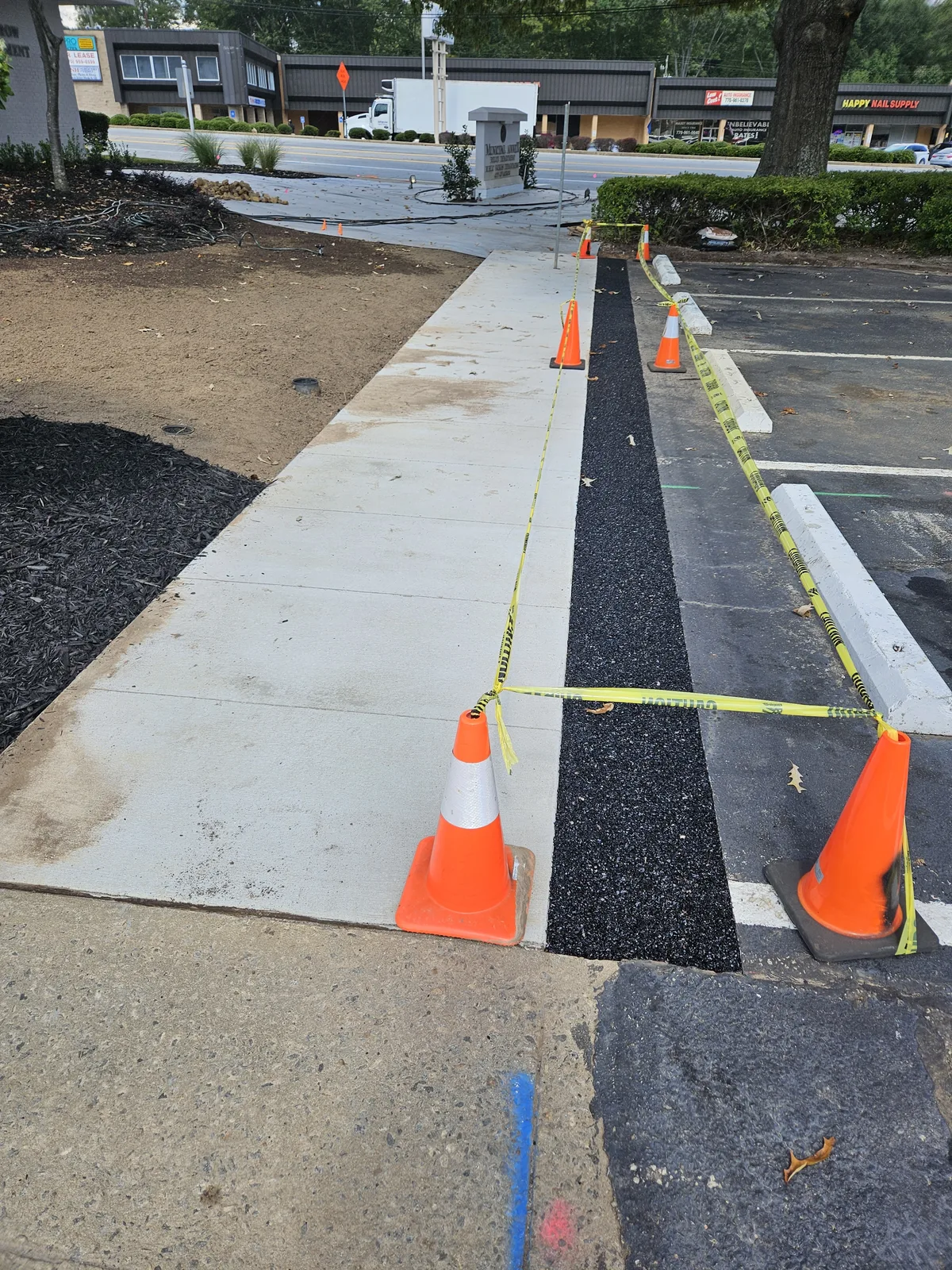
  • Control joints cut at proper spacing
  • Controlled curing to prevent surface cracking
  • Residential and commercial properties
  • Free written estimate before any work begins

How Our Concrete Process Works

From design to cure, here is what to expect on your project.

1

Design Consultation

We walk the site with you, discuss dimensions and finish options, and confirm utility locations before scheduling.

2

Site Prep and Forming

Soil is graded and compacted, forms are set to exact dimensions, and rebar or wire mesh is placed for reinforcement.

3

Pour and Finish

Concrete is poured, screeded flat, and finished to your chosen texture. Expansion joints are cut at intervals to control cracking.

4

Cure and Seal

We apply a curing compound immediately after finishing. Once cured, a penetrating sealer is applied for long-term protection.

Seasonal Timing

Best Time of Year to Pour Concrete in Georgia

Concrete can be poured most of the year. The temperature during the cure is what really matters. Here is the seasonal picture.

Ideal cure

Spring

March to May

Mild temperatures are perfect for a slow, strong cure. A prime pouring season.

Pour early

Summer

June to August

We pour early in the day and manage moisture so the heat does not flash-cure and weaken the surface.

Ideal cure

Fall

September to November

Cool, steady temperatures again make for excellent curing conditions.

Around the freezes

Winter

December to February

We schedule pours in mild windows and protect the fresh slab, since freezing during the cure ruins strength.

Project Photos

Concrete Work in Newton County

What Affects Your Concrete Project Cost

Four variables that shape the final number on your quote.

Project Size and Layout

Larger pours cost less per square foot. Complex shapes, curves, or multi-level work require more forming time and drive the per-foot price up.

Finish Type

A standard broom finish is the most affordable. Exposed aggregate, salt finish, or stamped concrete each add labor and specialty tool cost.

Reinforcement Needs

Driveways and areas with heavy vehicle loads require thicker pours and heavier rebar schedules than sidewalks or decorative slabs.

Site Access and Demo

Tight access limits equipment options and adds hand-work time. Breaking out and hauling existing concrete adds a flat demolition cost.

Why Liba

Why Homeowners Trust Liba With Concrete

Formwork and Rebar First

Set to grade and reinforced before a single yard is poured.

Cured for Georgia Weather

Built to handle freeze-thaw cycles and ground movement.

Sidewalks, Driveways, Slabs

Flatwork and curbs done right the first time.

No Cracks by Year Three

Proper prep and curing is why it lasts.

Questions

Concrete Work FAQ

How long does concrete take to cure in Georgia?

Concrete reaches enough strength to walk on in about 24 to 48 hours in Georgia's climate. Full cure strength takes 28 days. We keep it covered and misted during initial cure to prevent cracking from rapid surface drying, especially in summer heat. You should avoid heavy traffic on the slab for at least a week, and hold off on driving vehicles over a new driveway apron for a full 28 days.

Do you pour concrete for driveways, or just sidewalks?

We handle sidewalks, driveways, patios, parking aprons, and other flatwork for both residential and commercial properties. If it is concrete and it is flat, we do it. The same formwork and rebar process applies to every pour, regardless of size or use.

Why does concrete crack, and how do you prevent it?

Concrete cracks from improper base prep, missing rebar, wrong mix, or rapid drying without curing. We address all four: we excavate and compact the base, place rebar, use the right mix for the application, and control the cure. Control joints are also cut at the right spacing to direct any shrinkage cracking where it will not be visible or affect the structure. Georgia clay soil adds another variable: the ground shifts with moisture changes, and a slab without rebar has nothing holding it together when that happens.

Do you need permits for a concrete sidewalk in Covington?

It depends on the scope and location. Public-facing sidewalks adjacent to a street typically require a permit. We handle the permitting process as part of commercial jobs. For residential projects we advise you on what your county requires before we start, so there are no surprises mid-project.

How much does a concrete sidewalk cost in Covington, GA?

Cost depends on linear footage, thickness, any demo needed, and site conditions. A short residential walkway and a commercial parking apron are priced differently. We provide free written estimates before any work begins so there are no surprises. Call (470) 226-7215 or request an estimate online using the form on this page.

Can you pour concrete in winter in Georgia?

Yes, we just schedule around hard freezes and protect the fresh pour. Concrete needs to cure above freezing to reach full strength, so we pick mild windows in winter. Spring and fall give the most reliable curing conditions.

Free Estimate

Ready for Concrete That Will Not Crack?

Free estimate on sidewalks, driveways, slabs, and curbs across Newton County and Metro Atlanta.

Call (470) 226-7215
Call Now Get a Free Quote