The Right Fix
Water Problems Only Get Worse
Standing water next to the house, eroding slopes, muddy areas that stay wet for days after a rain. These are not minor inconveniences. Standing water beside a foundation seeps into the soil and puts hydrostatic pressure against the footing. Over years, that causes cracking, settling, and expensive structural repairs. Georgia clay does not absorb water the way sandy or loamy soil does. It sheets off and runs to the lowest point, which is often right next to the house or down a slope that has no protection.
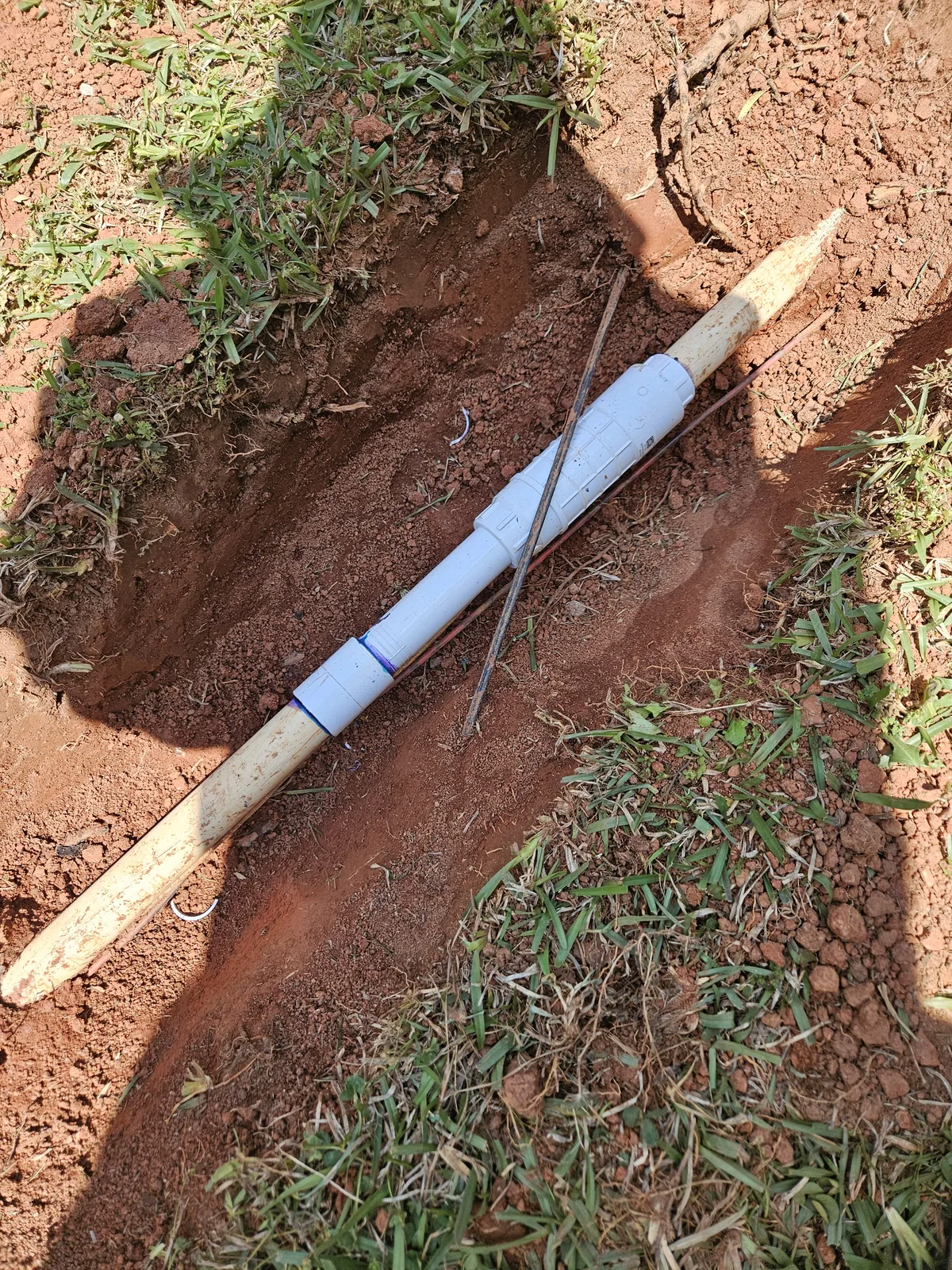
A cheap French drain install is not the answer if the grade of the property is sending water toward the house in the first place. And a French drain that was not built with the right aggregate and perforated pipe filled with sediment in two seasons will be useless. The water comes back and the problem looks fixed until it clearly is not.
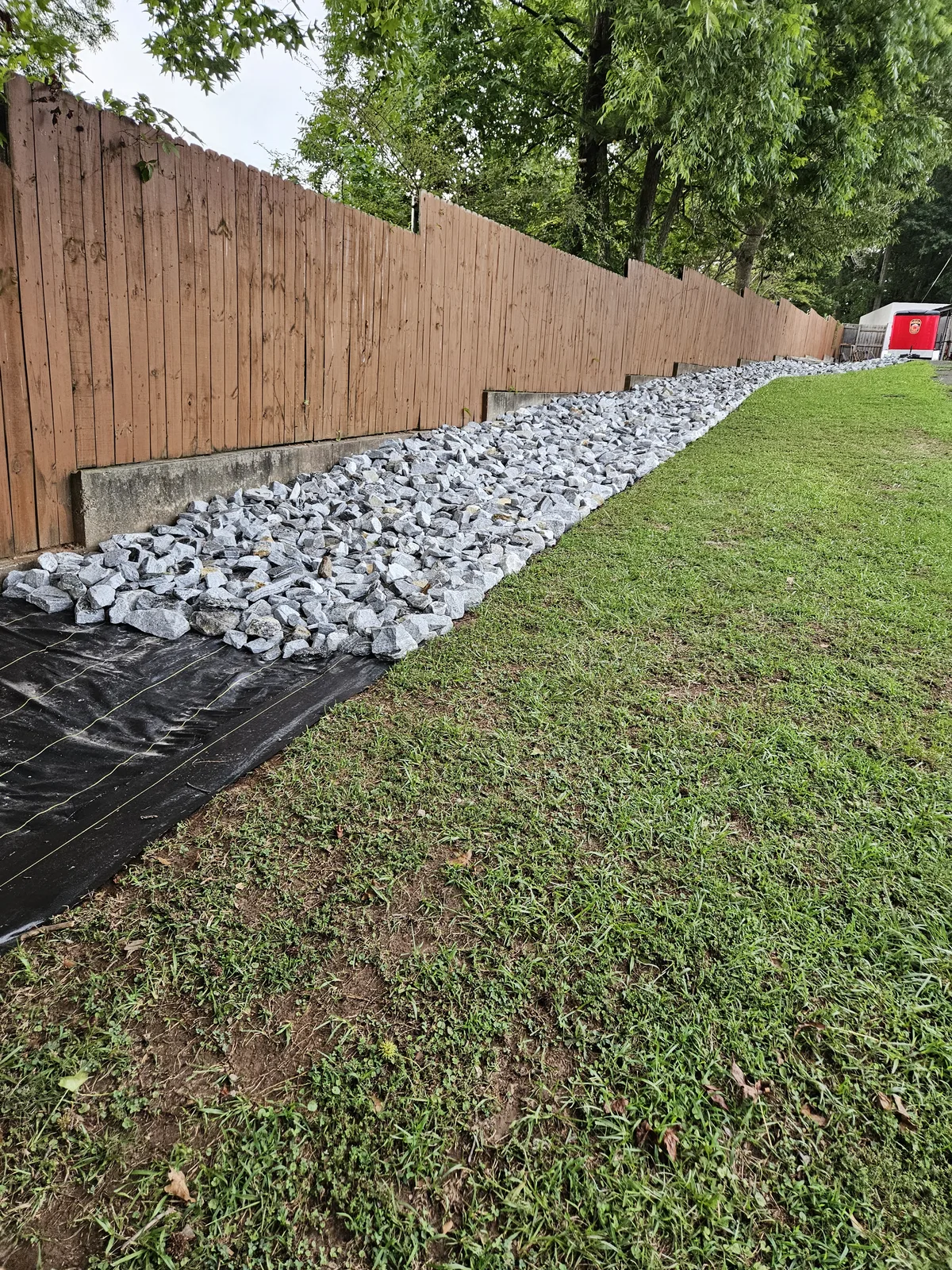
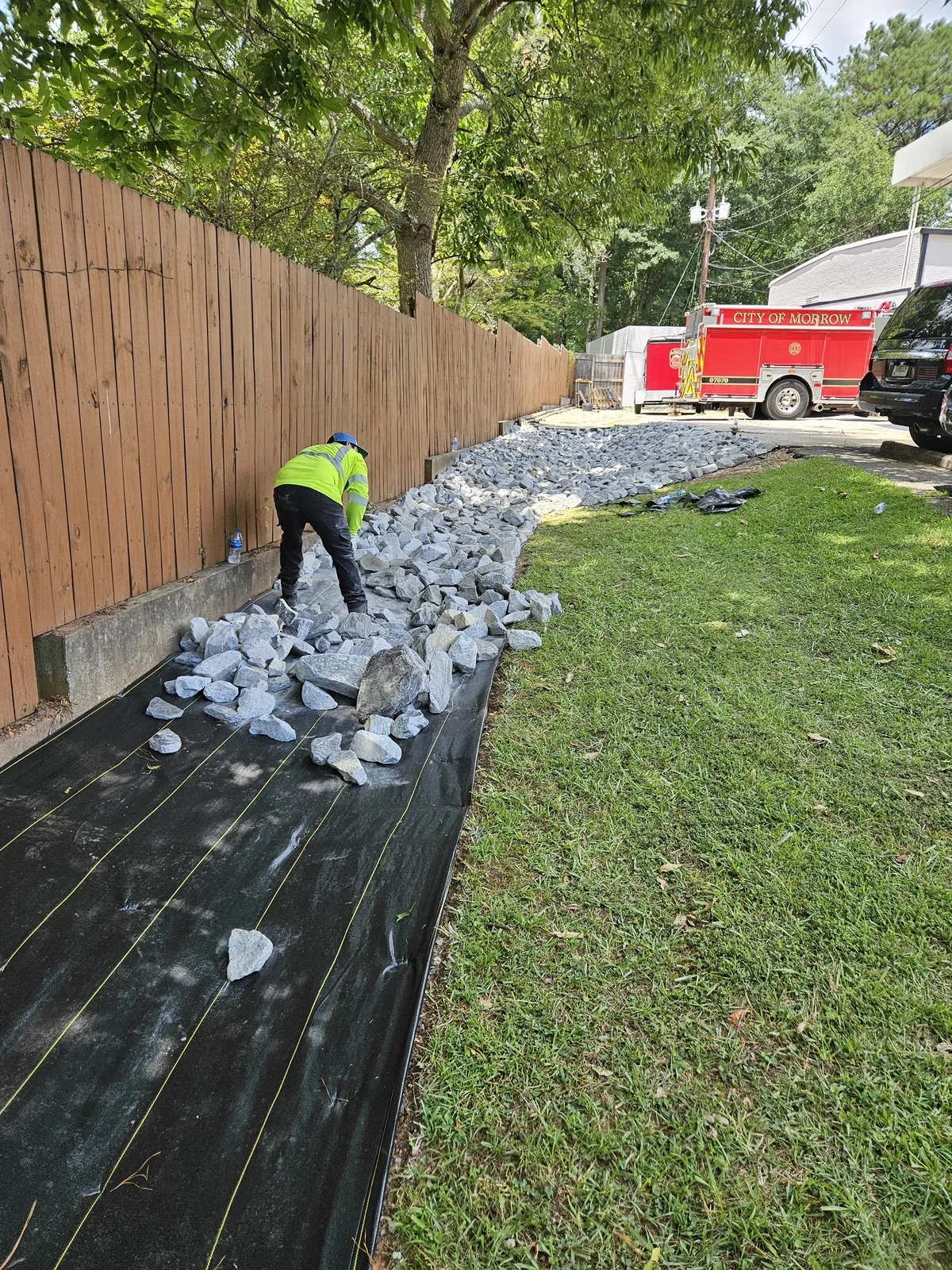
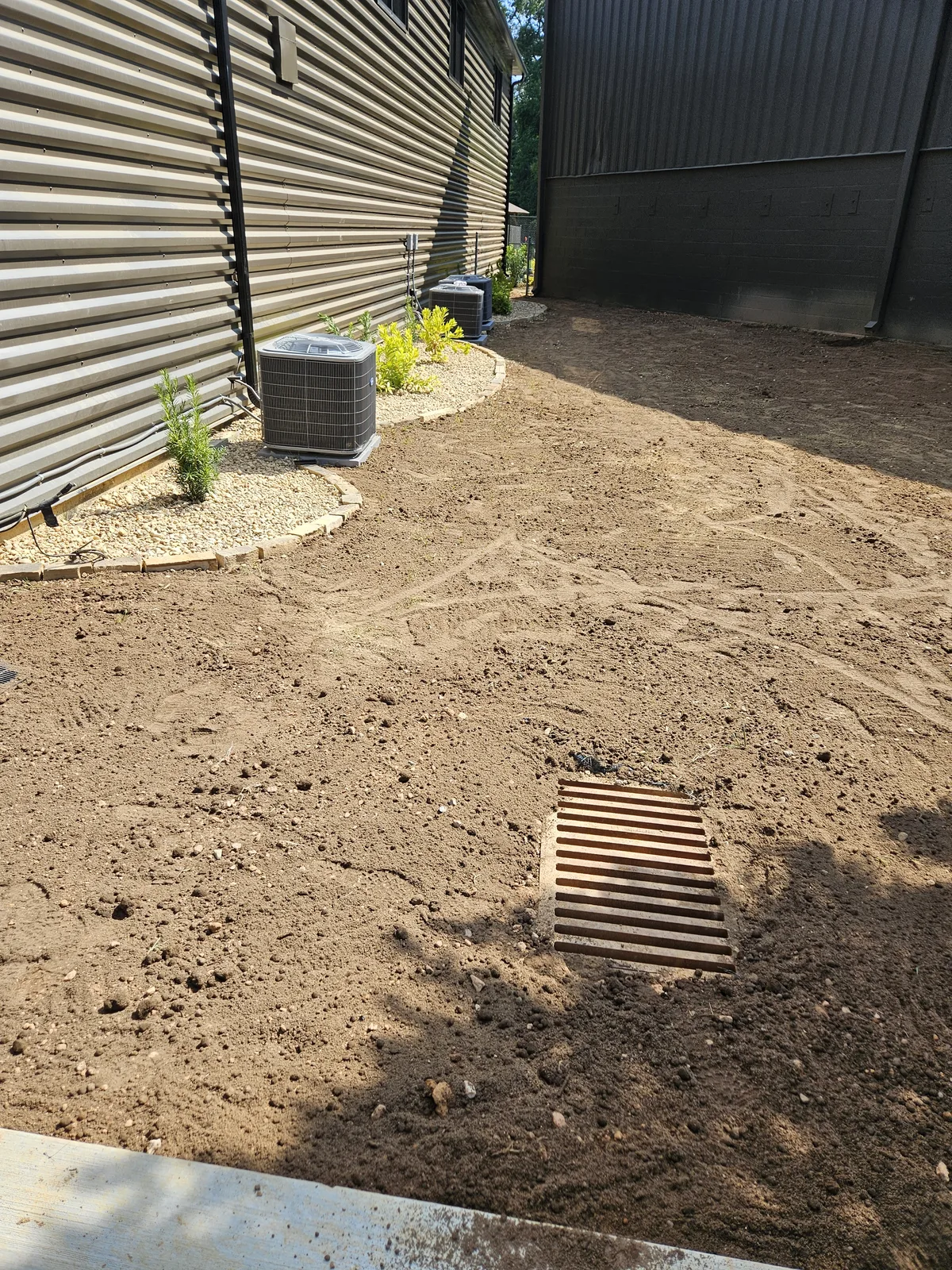
Liba starts every drainage job by walking the full property and understanding where water enters, where it travels, and where it ends up. That assessment determines the right solution. Sometimes it is regrading alone, redirecting runoff away from structures. Sometimes it is a French drain or channel drain to capture and move water underground. For slopes with active erosion, rip-rap stone placement stops the movement of soil while letting water pass through. Downspout extensions and swale construction are often part of the same job.
We have handled drainage work on residential lots, commercial properties, and right-of-way work across Newton County. Our GDOT certification means we also qualify for government drainage and stormwater projects. Every job starts with a written estimate that explains what we are doing and why.
Newton County gets over 50 inches of rain per year, and Georgia red clay does not absorb it. Water sits on the surface, flows toward the lowest point, and collects against foundations and in low spots that never fully dry out. Most of the grading and drainage problems we fix in Covington were created when the original grade was set wrong during construction or when additions disrupted natural drainage paths. A properly designed French drain or dry creek bed in Georgia clay needs specific gravel sizing and slope to actually move water and not just collect it underground.