Done Right the First Time
Why Cheap Concrete Fails in Three Years
A cracked or heaving sidewalk is not just an eyesore. It is a trip hazard, a liability, and a sign that the pour underneath was done without proper prep. Georgia clay soil shifts with moisture. Without adequate base excavation, well-compacted fill, and rebar running through the slab, the concrete has nothing to hold it in place when the ground moves.
Most low-bid concrete pours skip the rebar and rush the cure. They look fine on day one. By year three, you have a network of cracks radiating from every weak point in the slab. The freeze-thaw cycles that Georgia gets in winter accelerate this: water enters the cracks, expands when temperatures drop overnight, and splits the concrete further. You end up paying for demo and a full repour instead of just the original job done correctly.
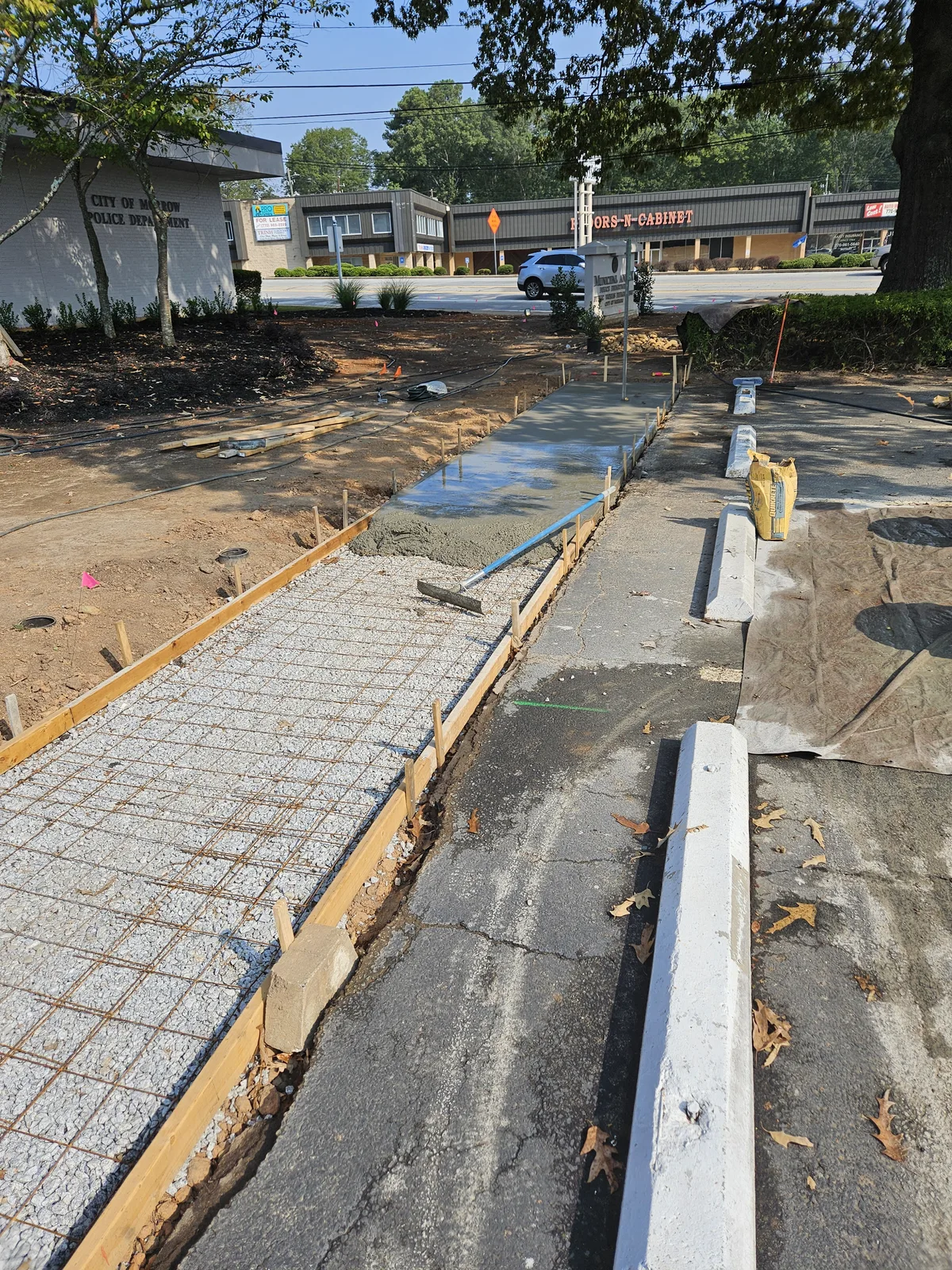
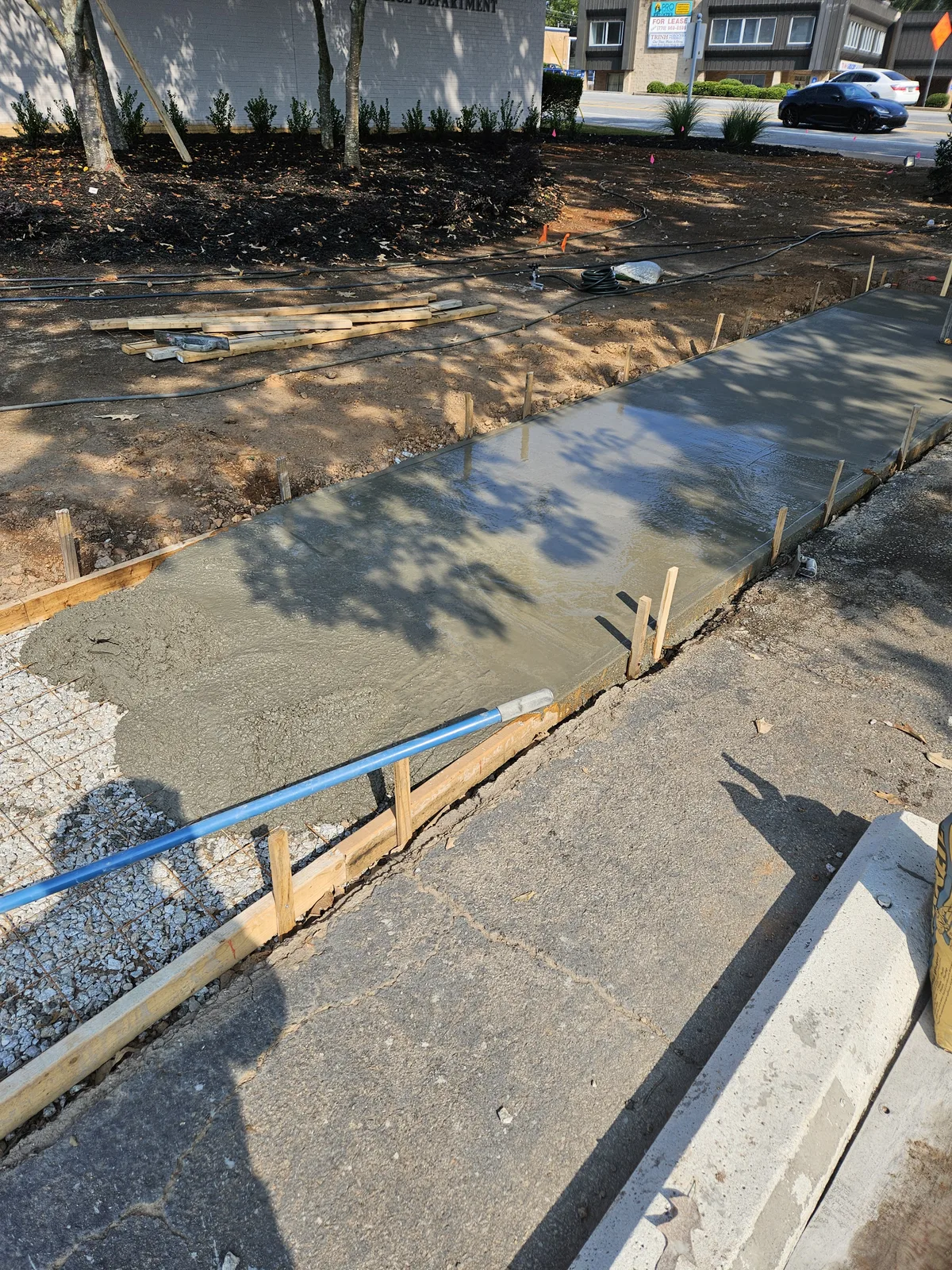
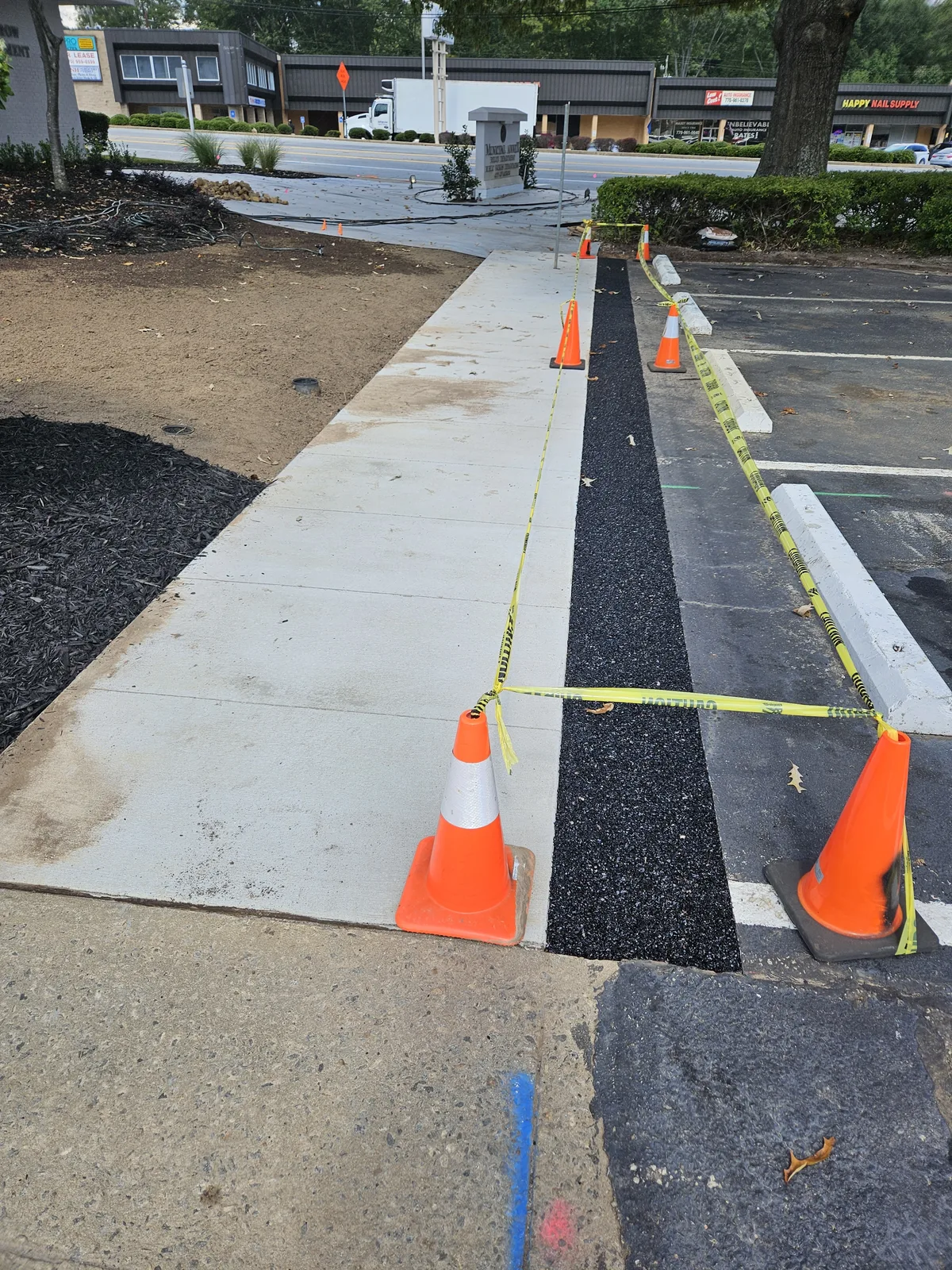
At Liba, the process starts with proper excavation to the right depth for the application, whether that is a residential sidewalk, a commercial parking apron, or a patio. We set forms to grade so the finished surface drains correctly and does not trap water against a building or along a low edge. Rebar goes in before every pour. Control joints are cut at the right spacing to direct any shrinkage cracking to predetermined lines where it will not be visible or structural.
We work with both residential and commercial clients across Covington, Conyers, McDonough, Monroe, and the surrounding Newton County area. Scope ranges from a short front walkway to full commercial parking areas and government-contracted flatwork. Our GDOT certification covers the latter. Every job, regardless of size, gets the same formwork and rebar process.
After the pour we control the cure. In Georgia summers, concrete that dries too fast on the surface develops surface cracks before the interior has gained strength. We keep new pours covered and misted during the initial cure window to prevent this. The result is a uniform, dense surface that holds its finish for decades.
Concrete cures through a chemical reaction that requires moisture, not just drying out. In Georgia summers with temperatures above 90 degrees, surface moisture evaporates too fast and the top layer cures before the interior does, which causes surface cracking within weeks. We pour early in the morning during summer months and apply curing compound immediately after finishing to slow evaporation and keep the reaction going uniformly. Georgia red clay under a concrete slab also expands and contracts with moisture, which is why proper sub-base compaction and vapor control matter here more than in drier climates.