The Right Way
Why Most Sod Jobs Fail
New sod fails when the ground under it has not been properly prepared. Uneven grade means water pools at the edges. Compacted Georgia clay means roots cannot penetrate deeper than an inch. Wrong grass variety means weak plants fighting conditions they were never built for. By fall, the bare spots are back and you are looking at paying for it all over again.
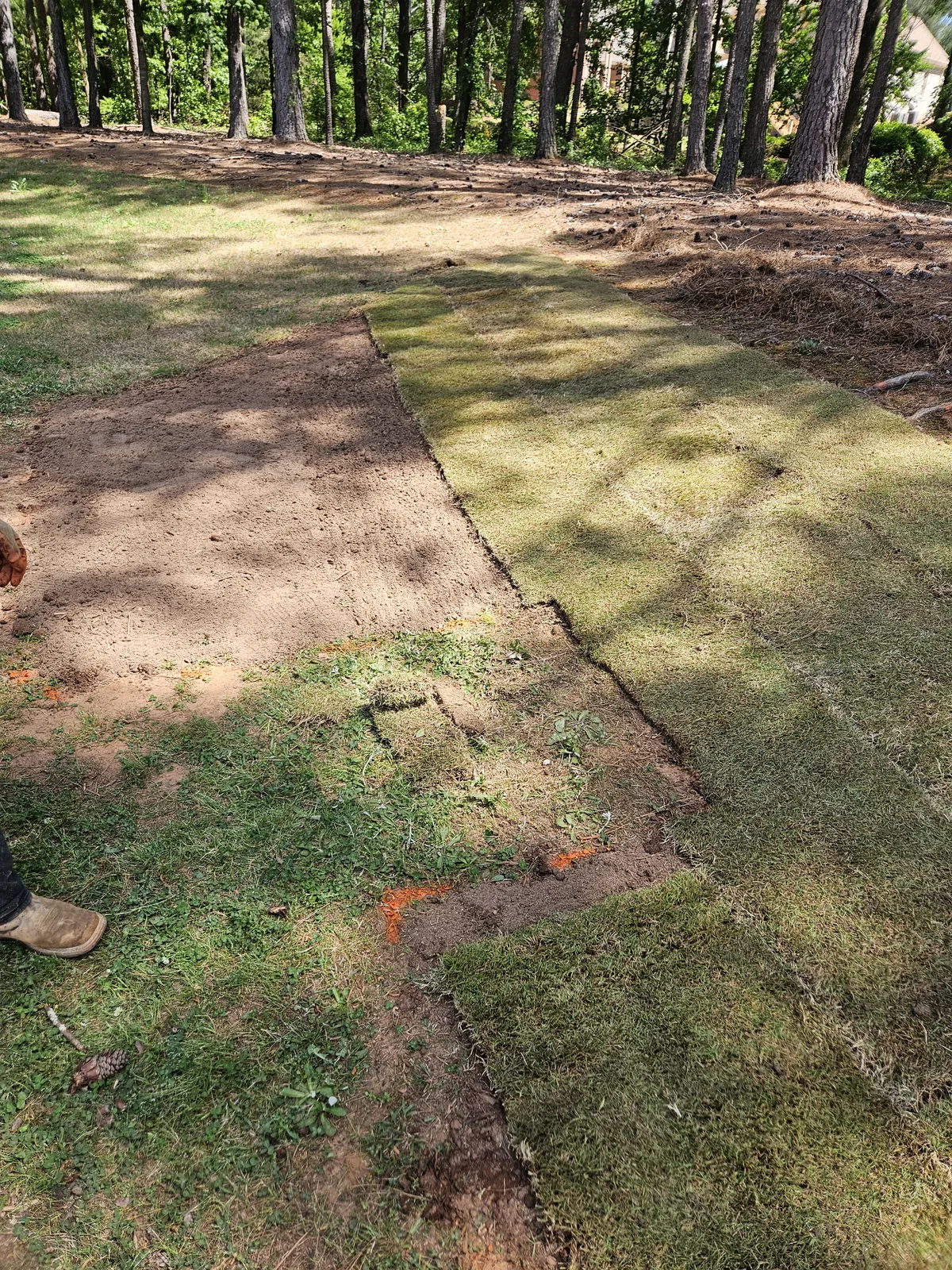
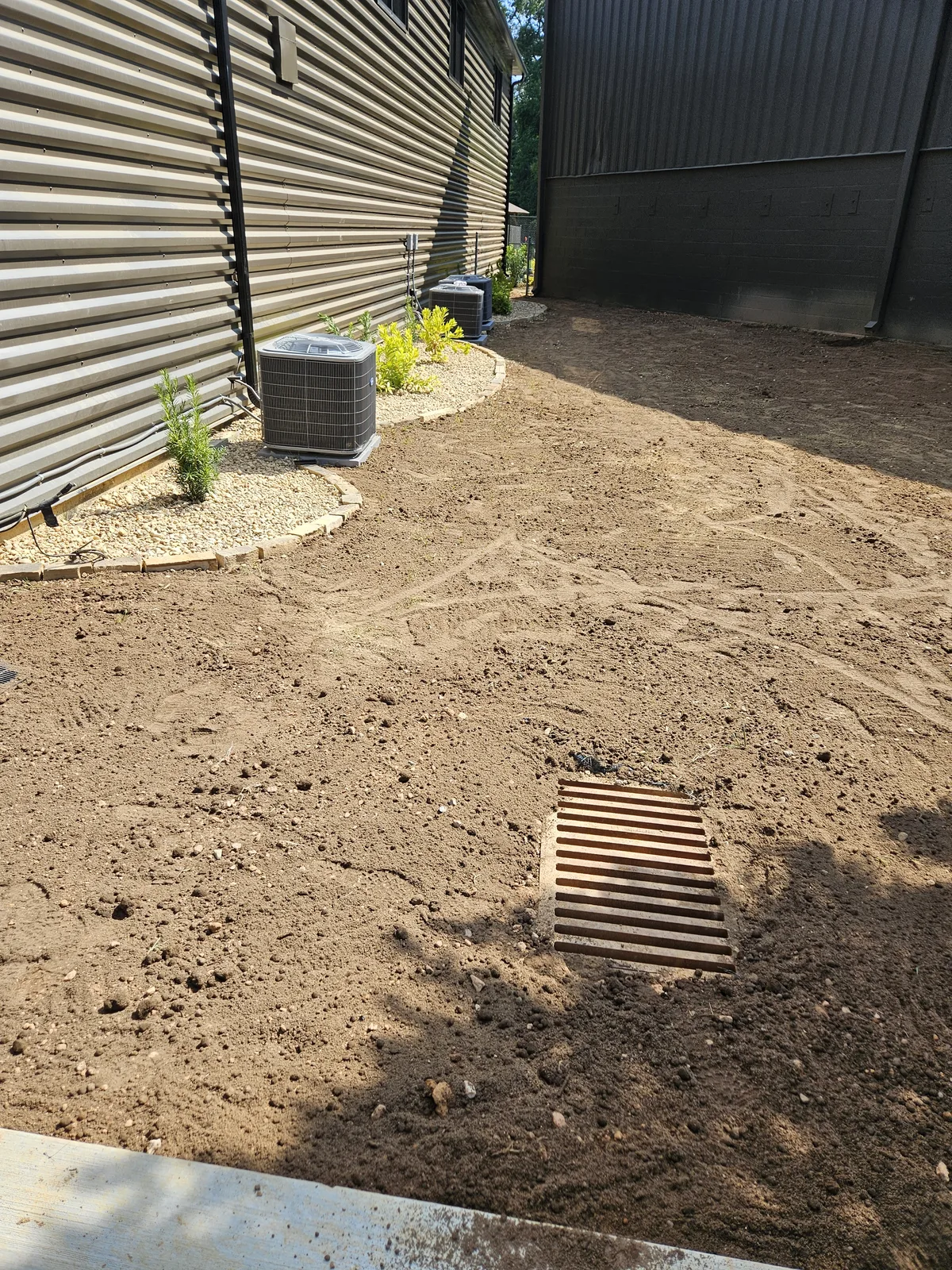
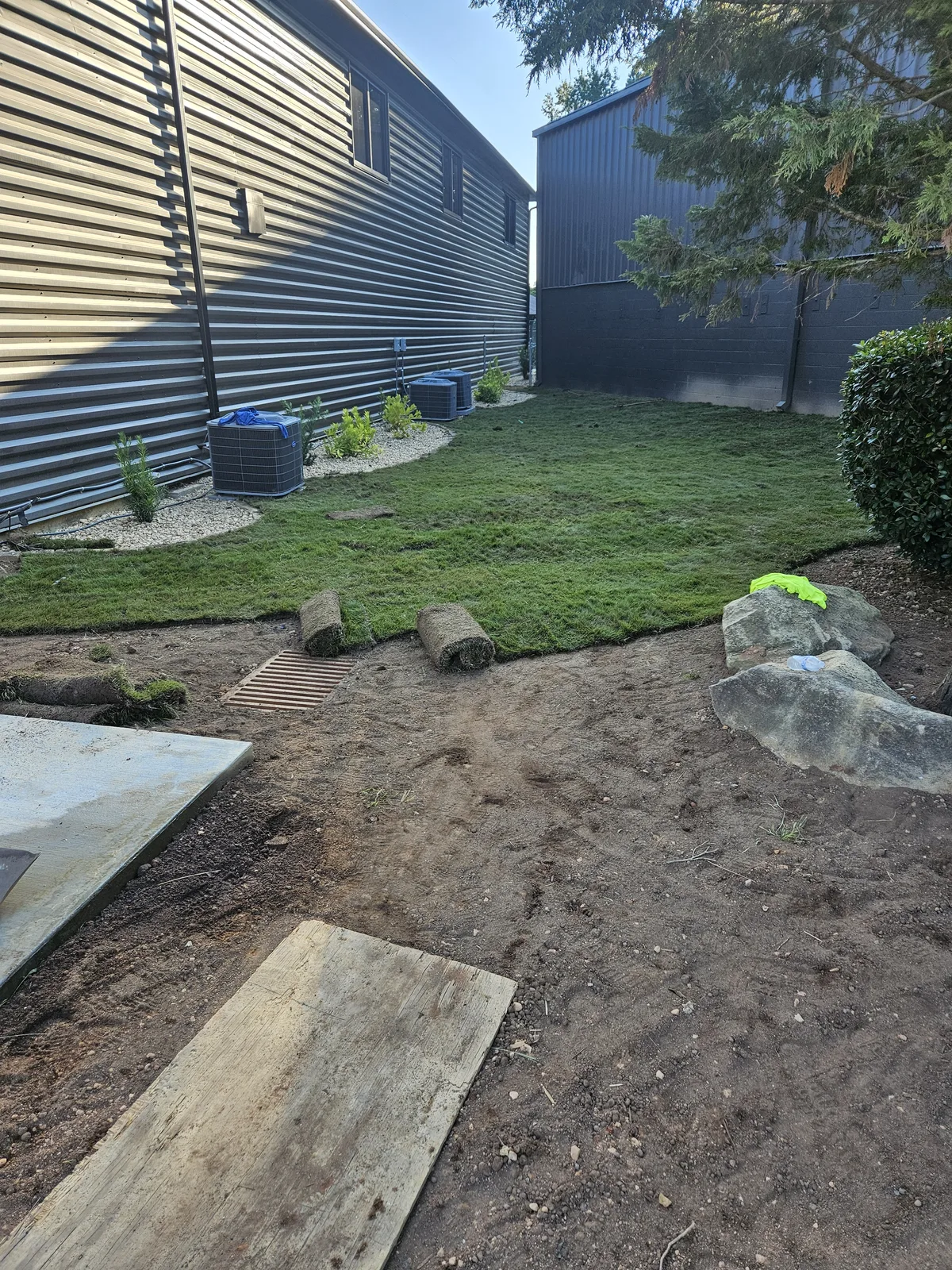
At Liba, ground prep is not an afterthought. Before a single piece of sod goes down, we grade and smooth the surface, remove old debris and rocks, and add topsoil where the existing soil is too shallow or compacted. If the area has drainage issues, we address them before installation so water moves away from your lawn instead of sitting in it.
Grass variety selection matters just as much as the prep work. Bermuda handles full-sun areas and heavy foot traffic better than anything else in Newton County. Zoysia is the lower-maintenance choice with a softer feel underfoot. For shaded areas under trees or along the north side of structures, Tall Fescue stays green year-round. St. Augustine holds up in moderate shade with moderate traffic. We walk the property with you, note your sun exposure and soil conditions, and recommend the variety that will root fast and stay thick.
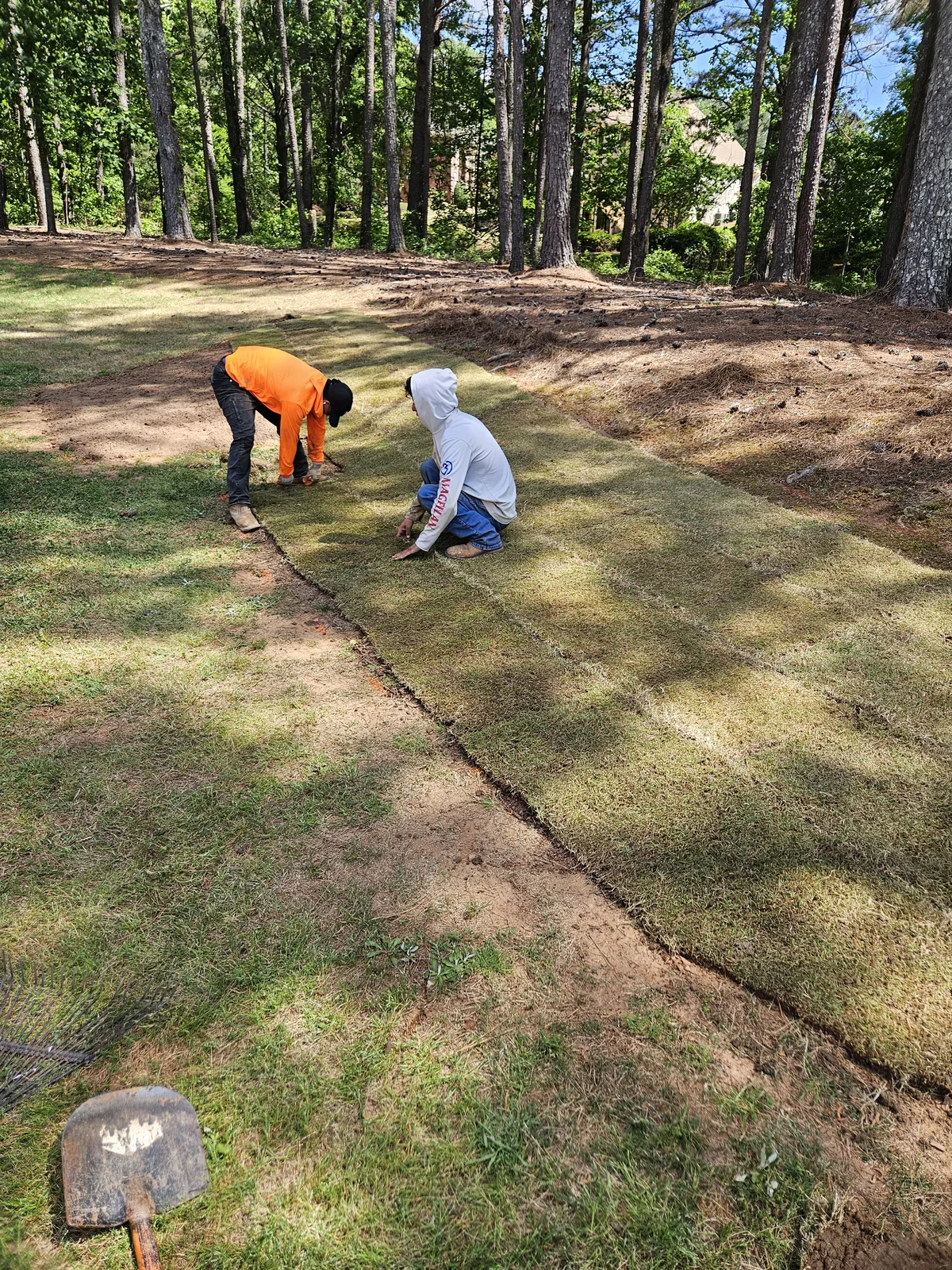
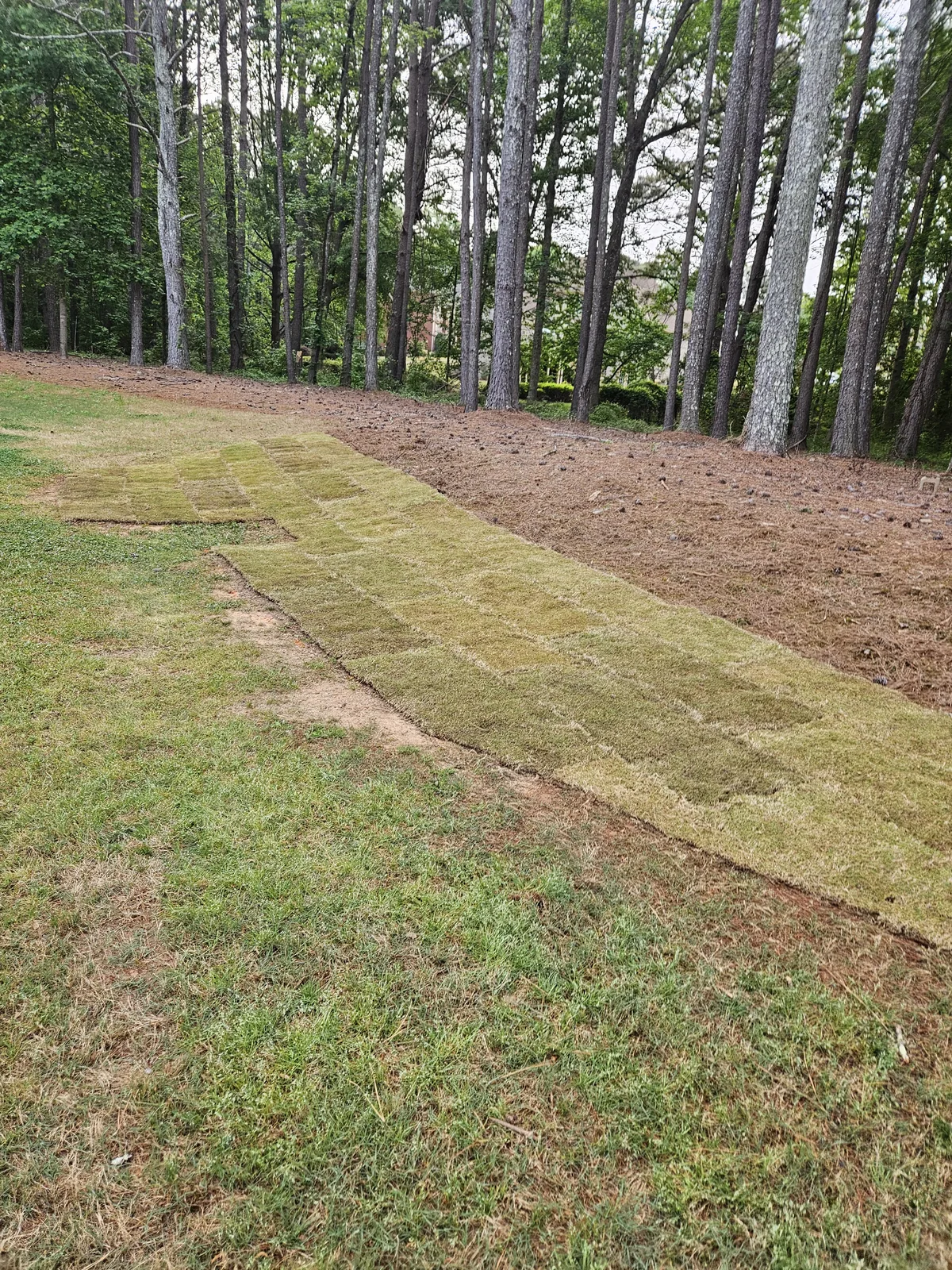
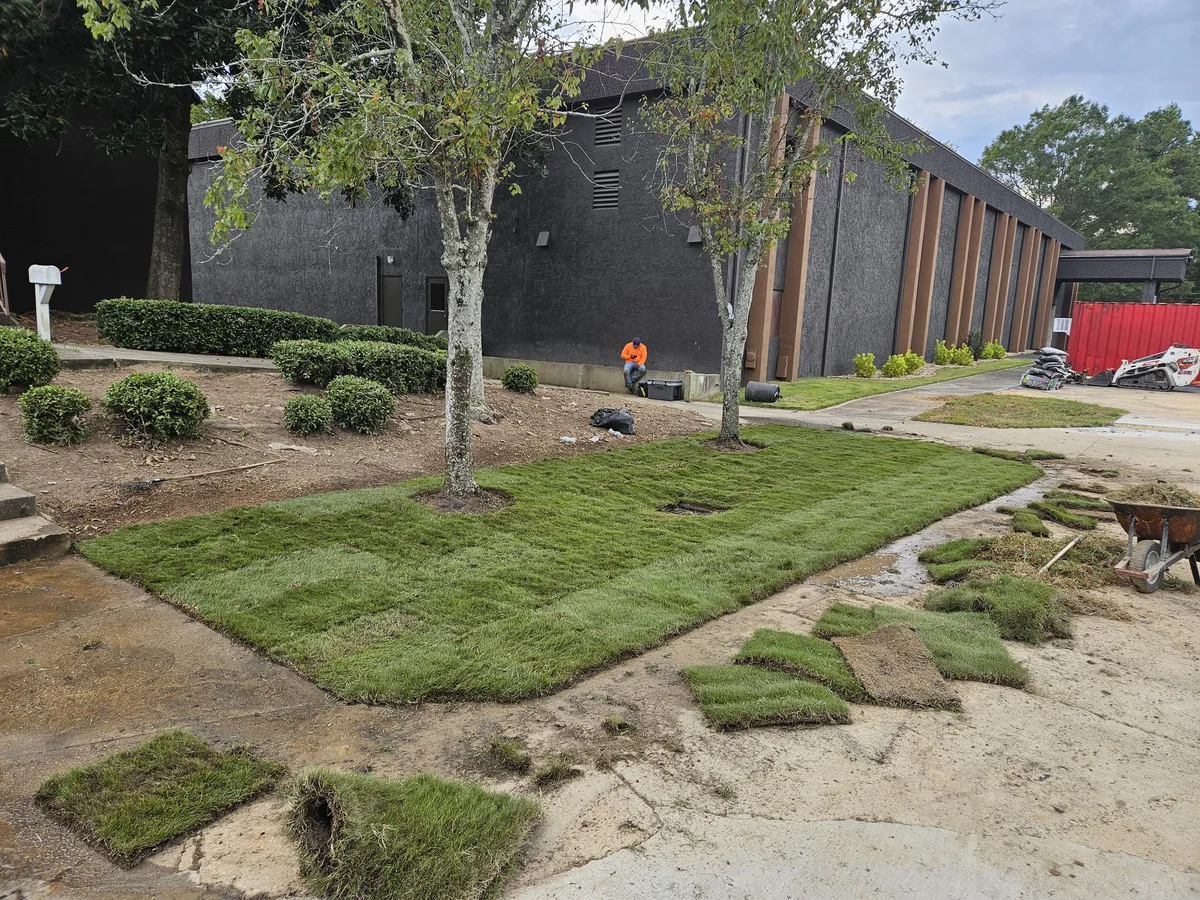
Our crew lays each row with proper overlap and tight seams so dry edges and gaps do not appear two weeks in. After the install, we give you a clear watering schedule: daily for the first 10 days, then tapering off as roots establish. Most lawns in Georgia root in 2 to 4 weeks during warm months.
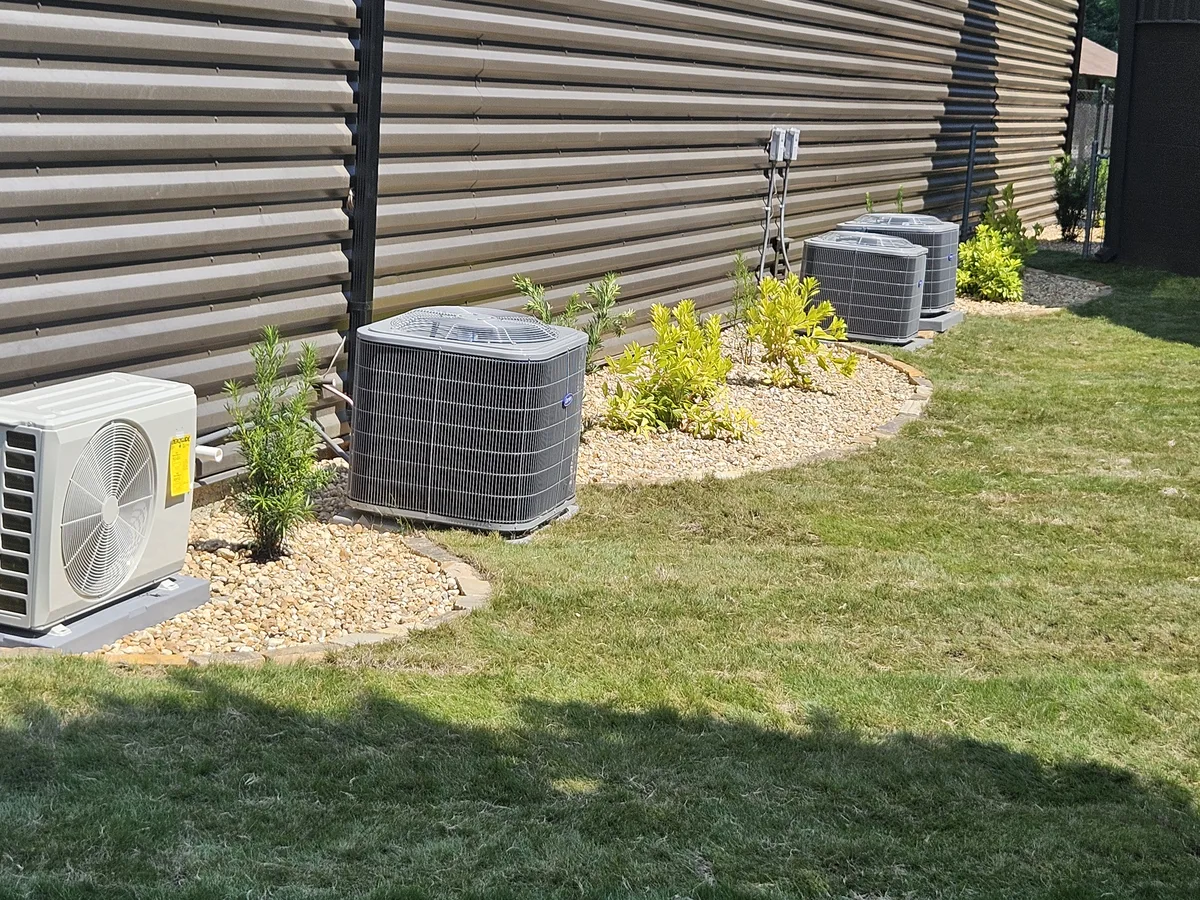
We handle both residential and commercial sod installation across Covington, Conyers, McDonough, Monroe, and surrounding Newton County. The project photos on this page are from a large commercial job. The same crew, the same prep process, the same attention to seams and grade.
Georgia red clay compacts to near-concrete density, which is why sod fails here when contractors skip base prep. We break up and amend the soil first, so roots can push below the surface instead of sitting on top of it. Bermuda dominates full-sun Georgia lawns because it tolerates the heat and bounces back from drought, while Fescue holds color in the shade where Bermuda thins out.